Etched Glass Balustrades: The Art of Lighting a Design Into Glass
Posted on 22 October 2026 by Liam
A Specialised Design for a Glass Balustrade
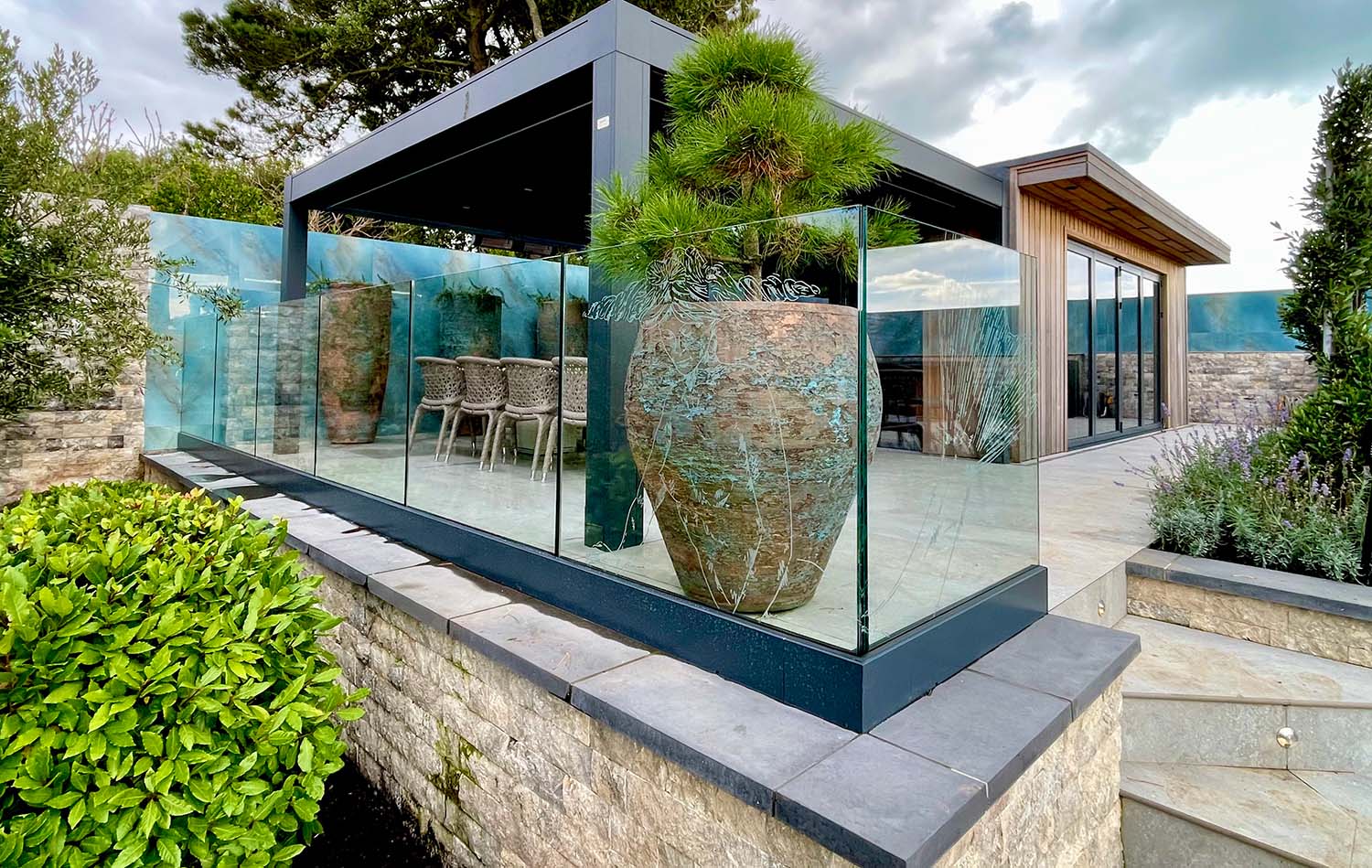
A mermaid sculpture beside an outdoor swimming pool inspired a one-off glass design for a South Coast home. The client wanted the balustrade to complement the sculpture without competing with it, so Go Glass Design Director Clive Sparkes created a bespoke etched design for the panels.
The result shows how a glass balustrade can do more than provide a barrier. With considered design, it becomes part of the setting: personal, distinctive and still open to the view.

What makes the Mermaid Balustrade distinctive?
The Mermaid Balustrade was designed around an existing feature: a striking sculpture beside the client’s outdoor pool. Rather than a standard pattern, Clive Sparkes created a unique etched design to complement it, showing how a made-to-measure balustrade can connect safety glass and its surroundings.
It does not have to dominate a space: it can add detail to a clear panel or bring a theme into an outdoor setting.

How does etched glass differ from a standard glass balustrade?
Both options can use toughened glass, with the final build-up specified for the project. A standard clear balustrade is quiet by design: minimal, transparent and focused on keeping the view open. An etched balustrade keeps that clarity but adds artwork as a feature: a bespoke image, a pattern, a privacy effect or branding, so the panel reads as designed rather than merely a barrier.
Both are made to measure, but etching allows the artwork itself to be scaled and tailored across the panels. Etched areas give a degree of visual screening, which plain clear glass does not, and they catch edge lighting. The character is the real difference: one subtle and contemporary, the other individual and art-led. Etching is a design choice, not a substitute for structural specification.
Where can an etched glass balustrade be used?
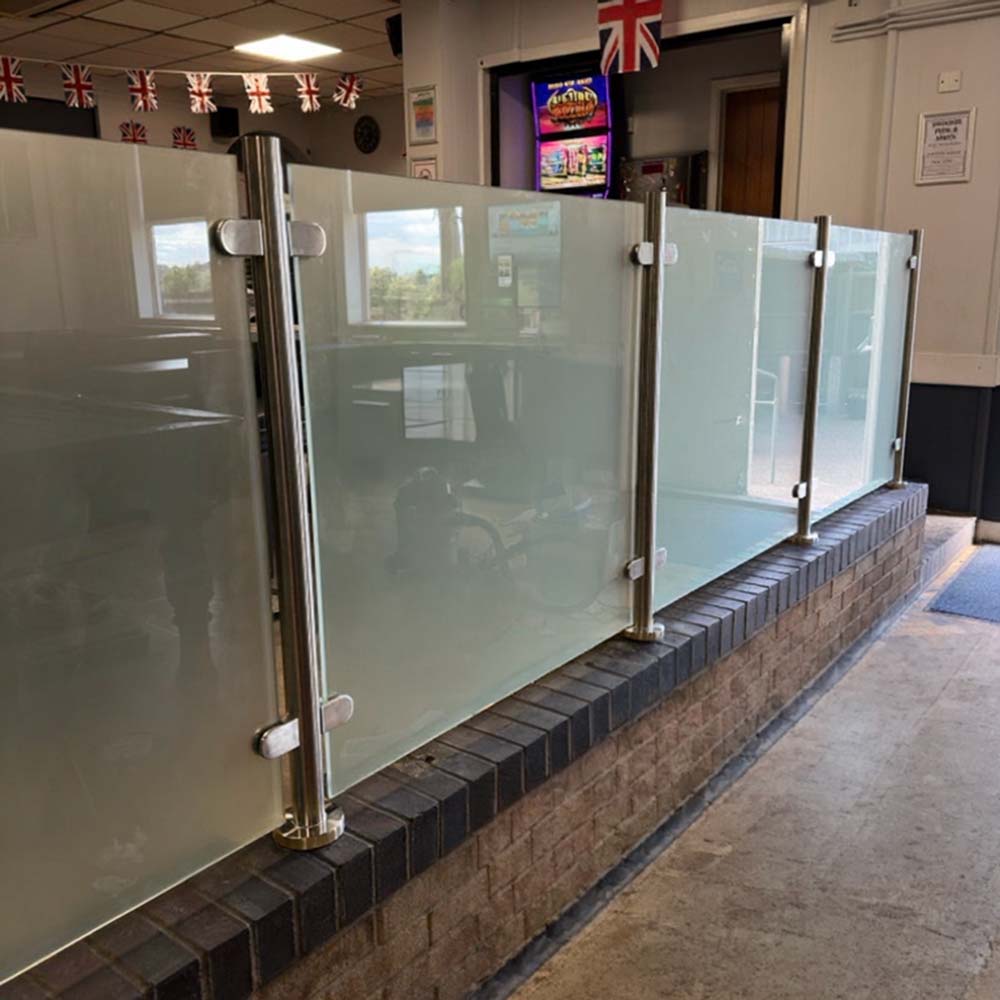
Etched balustrades suit almost anywhere a glass balustrade would go: internal staircases, landings and mezzanines, external balconies and terraces, and pool surroundings.
Internal settings often suit a lighter touch, where the design catches daylight through the stairwell. External and poolside settings benefit from bolder artwork and, where specified, edge lighting for the evening. Commercial spaces can carry a pattern, motif or branding across panels.
Which etched glass style works best on a balustrade?
Three styles are available, and the choice changes how the design reads. Clear leaves the background clear with the design etched onto the face, the lightest option and the one that keeps views most open. Obscure etches the background and leaves the design clear, giving maximum definition to the artwork. Privacy gives a satin background with the design etched on the reverse, so it screens far more while still letting light through.
On a staircase, Clear suits a design that catches daylight. Poolside, Obscure holds its own against bright surroundings. Where screening matters, Privacy does the heavier lifting.
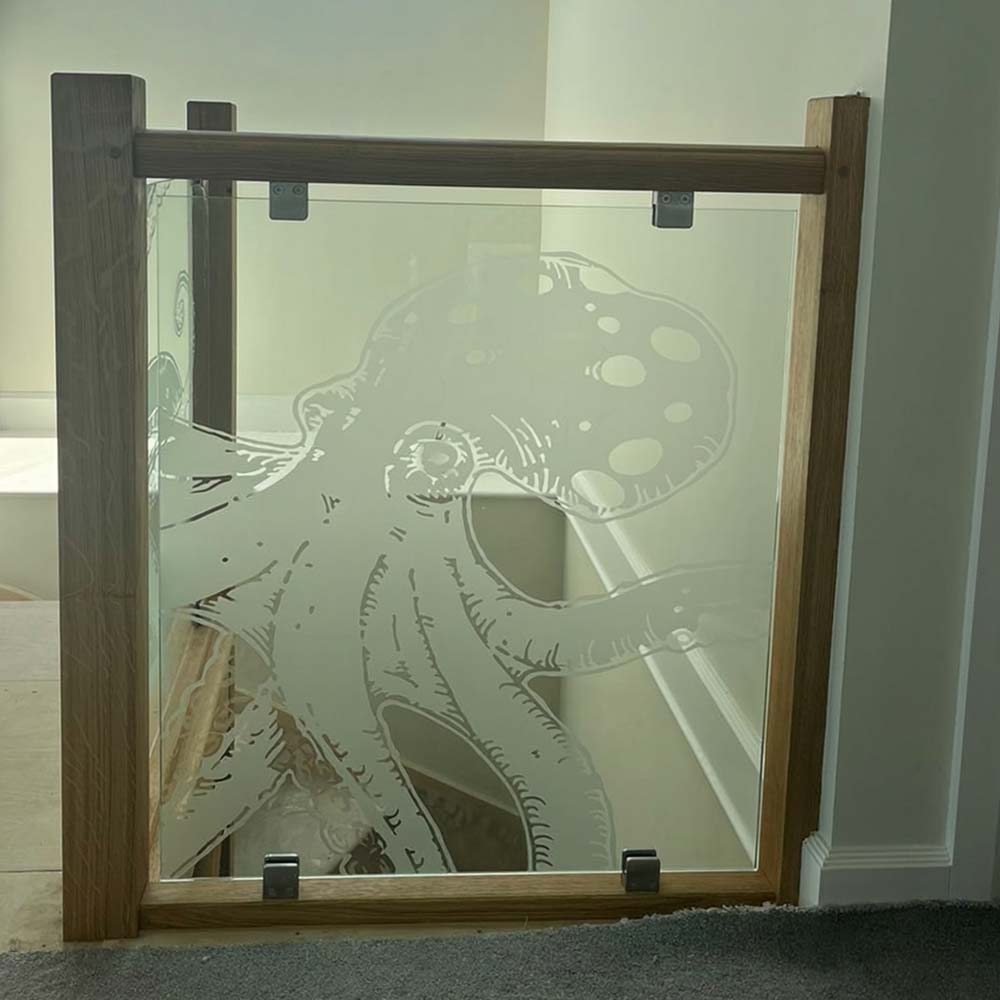
How is a design etched into a balustrade?
Go Glass artisans use sandblasting to create etched designs on glass. Artwork is developed by hand, adapted with CAD for scale, then prepared to suit each panel. From a motif inspired by a sculpture to a repeating pattern or commercial identity, the aim is a design at home in its setting.
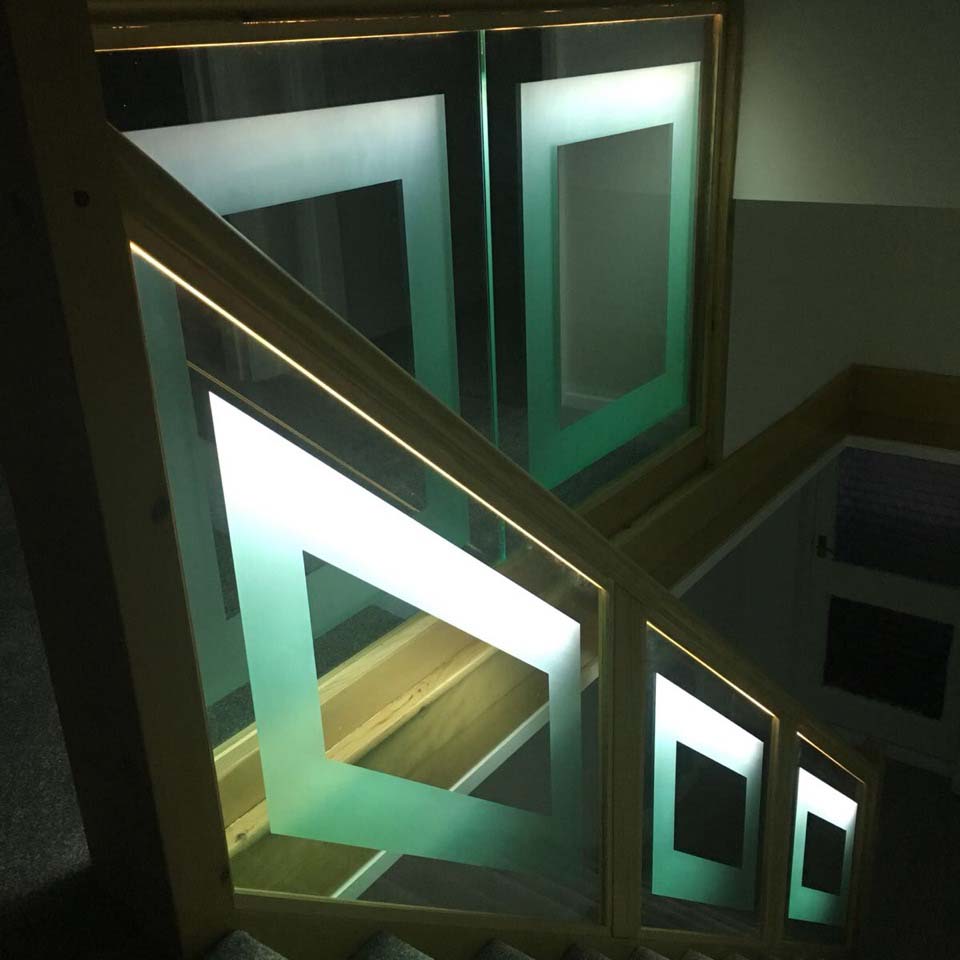
How can LED lighting bring the design to life?
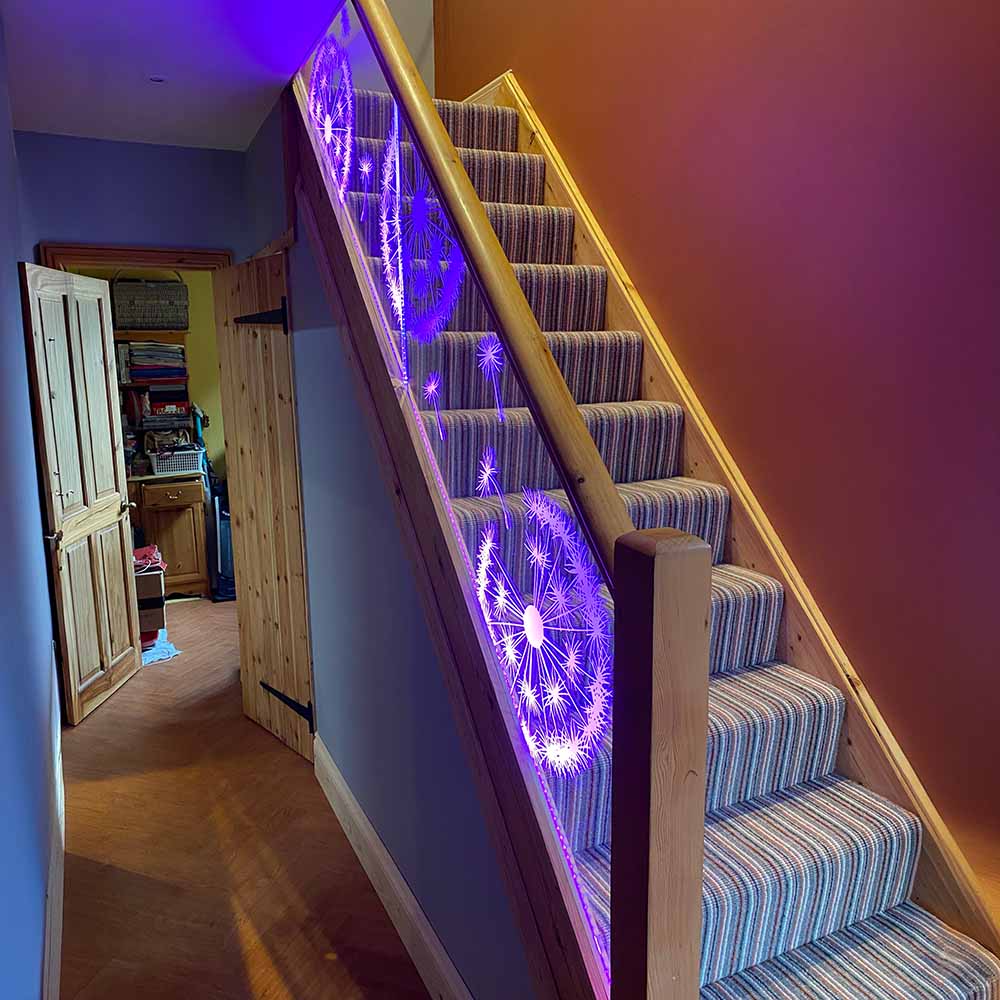
Etched areas catch and scatter light travelling through the glass, so they glow while the surrounding clear areas stay transparent. A white or colour-changing LED system can make a bespoke pattern prominent after dark, adding atmosphere to a staircase, balcony or poolside setting.
LEDs are typically concealed in a purpose-designed base channel or edge profile, directing light into the glass edge. The design should allow for the driver, wiring and future maintenance, and external projects need components suited to their environment. Lighting is an enhancement, not a replacement for compliant guarding.

What building regulations should a glass balustrade meet?
In England, Approved Document K covers protection from falling, collision and impact. For dwellings, guarding is generally required where the drop is more than 600mm. In a single-family dwelling, the usual starting points are 900mm for internal stairs, landings and floor edges, and 1,100mm for external balconies, Juliet balconies and roof edges.
For structural loading, BS 6180 sets the indicative horizontal line loads: 0.36 kN/m for domestic areas within or serving one single-family dwelling, excluding external balconies and roof edges, and 0.74 kN/m for external balconies and roof edges. Do not apply the 0.36 kN/m domestic figure to a balcony.
These figures are guidance, not a complete structural design, and regulations may differ across the UK, so confirm requirements with your building control body.
Technical disclaimer: Load, span, height and thickness figures in this article are general guidance only. Final specifications must be confirmed for each individual project.
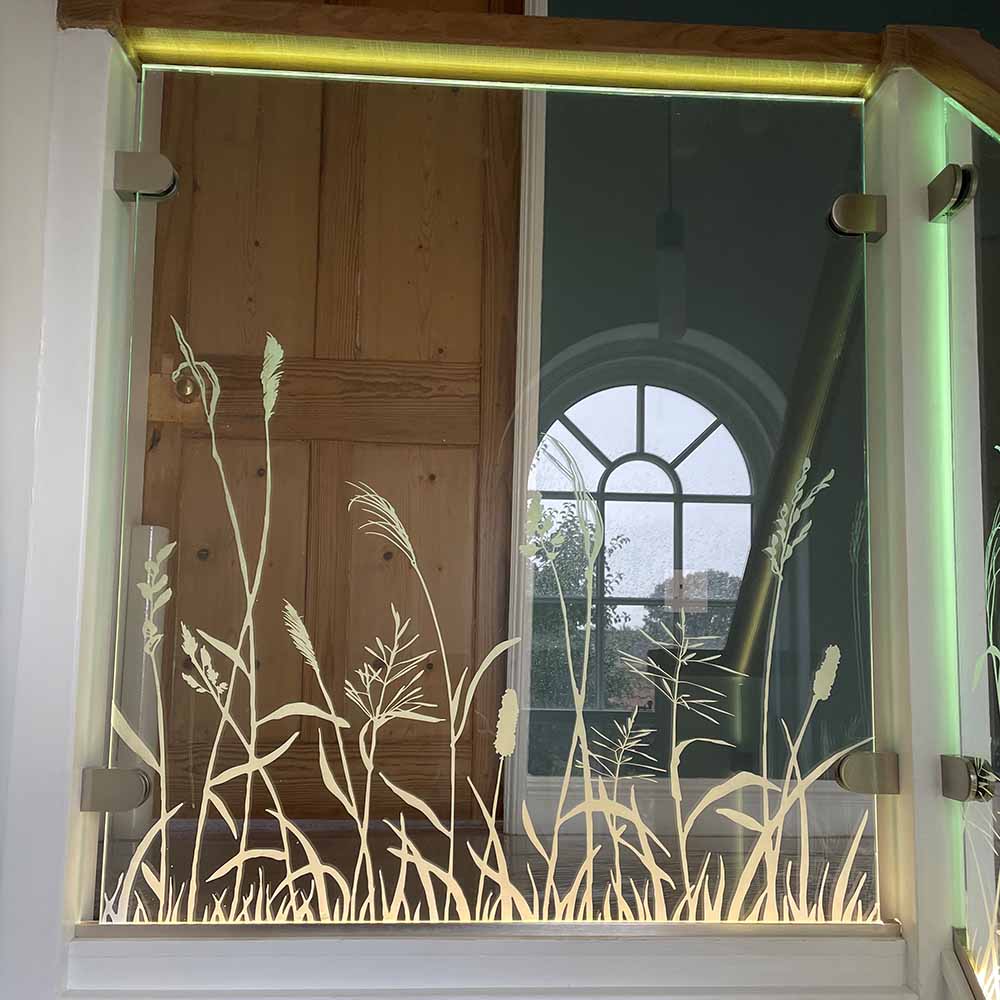
What should be included in the balustrade specification?
A good brief brings the creative and technical decisions together early. The items worth confirming:
- Location and use — internal or external, and whether it serves a staircase, landing, balcony or pool surround.
- Artwork — the design reference, its scale and position, and the preferred etching style.
- Glass and support — the safety-glass build-up, panel dimensions, channel and fixings.
- Performance — the required guarding height and the project-specific load design.
- Lighting — white or colour-changing effect, edge profile, driver location and maintenance access.
Frameless systems commonly use toughened laminated glass in an adjustable bottom channel. Laminated glass bonds two or more layers of toughened glass with an interlayer, so if a layer breaks the panel stays together. The glass specification is confirmed for each project.
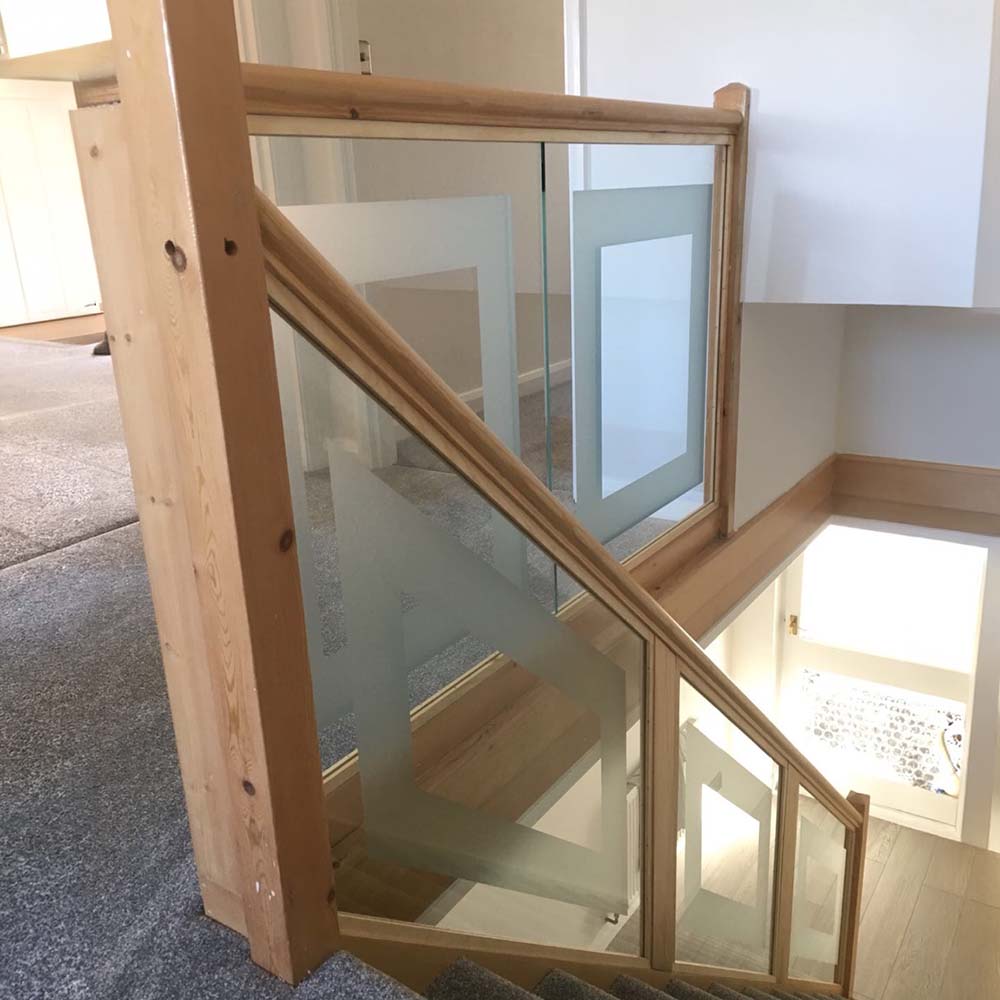
What maintenance does an etched glass balustrade need?
Etched glass is cleaned much like clear glass, with a soft cloth and a mild glass cleaner. Avoid abrasive pads and aggressive chemicals, which dull the etched finish over time, and dry the glass to prevent water marking.
External installations need more regular cleaning because of weather exposure. Where LED lighting is incorporated, the driver and connections should stay accessible for servicing.


At Go Glass, we’ve spent decades creating glass solutions that are practical, beautifully crafted, and built to last. Whether you’re designing a retail space or a bespoke display, our team is here to help bring your ideas to life.
Get in touch:
- Email Us
- Call Us
- Book a 15-minute virtual coffee with our design team.
We’re proud winners of Family Business of the Year 2024, and shortlisted for Unsung Hero at the G25 Industry awards
Can I use my own artwork?
Yes. Share your idea or reference image and the team can discuss how it might be adapted and scaled for the panels.
Does etching replace a safety-glass specification?
No. The design does not replace the need to specify the glass, support system and fixings.
Can the etched design be illuminated?
Yes. Edge lighting makes etched areas glow. The lighting system must be specified to suit the glass and location.
Can I have a different design on each panel?
Yes. Designs can be tailored to the panel layout, with advice on artwork placement and continuity across the balustrade.