
Need help? Get in touch
- 01223 211041
- info@goglass.co.uk
- Mon - Fri 8am - 4pm
- Outside these hours, please WhatsApp us.
Concept & Specification
Budget Online Quotation
Precision Manufacturing

Concept & Specification
Budget Online Quotation
Precision Manufacturing

You’ve got the concept, you’ve created the mood board, and now you need it turning into reality and someone who can actually make it in glass and mirror.
That’s where Go Glass comes in.
We are a design-led manufacturer of bespoke glass and mirrors for bars and restaurants. We work with interior designers, architects and fit-out contractors who already know what they want and need a no-nonsense UK manufacturer with short lead times and a can do attitude.
In hospitality, glass and mirrors are never just decorative. They shape atmosphere. They control light. They create depth in tight footprints. They protect surfaces. They elevate perceived value. And when they’re wrong, everyone notices, we are here to help and advise with structural advise which meets the stringent BS and EN standards needed for many applications.
You might need antique mirrored panels that add warmth without overpowering the space. Back-bar mirrors that align perfectly with shelving and lighting. Toughened glass shelving that can safely support bottles while looking almost invisible. A bespoke wine cabinet that becomes a focal point rather than an afterthought. Or etched and illuminated glass that carries branding subtly through the interior.
Why not set up a 15 min virtual coffee with one of our designers to discuss your concept and get free design advice from a family business working for 48 years.


Branded mirrors with logos


Etched and Framed Mirrors

Bepoke Wine Displays

Wine Display

Bespoke Glass Shelving
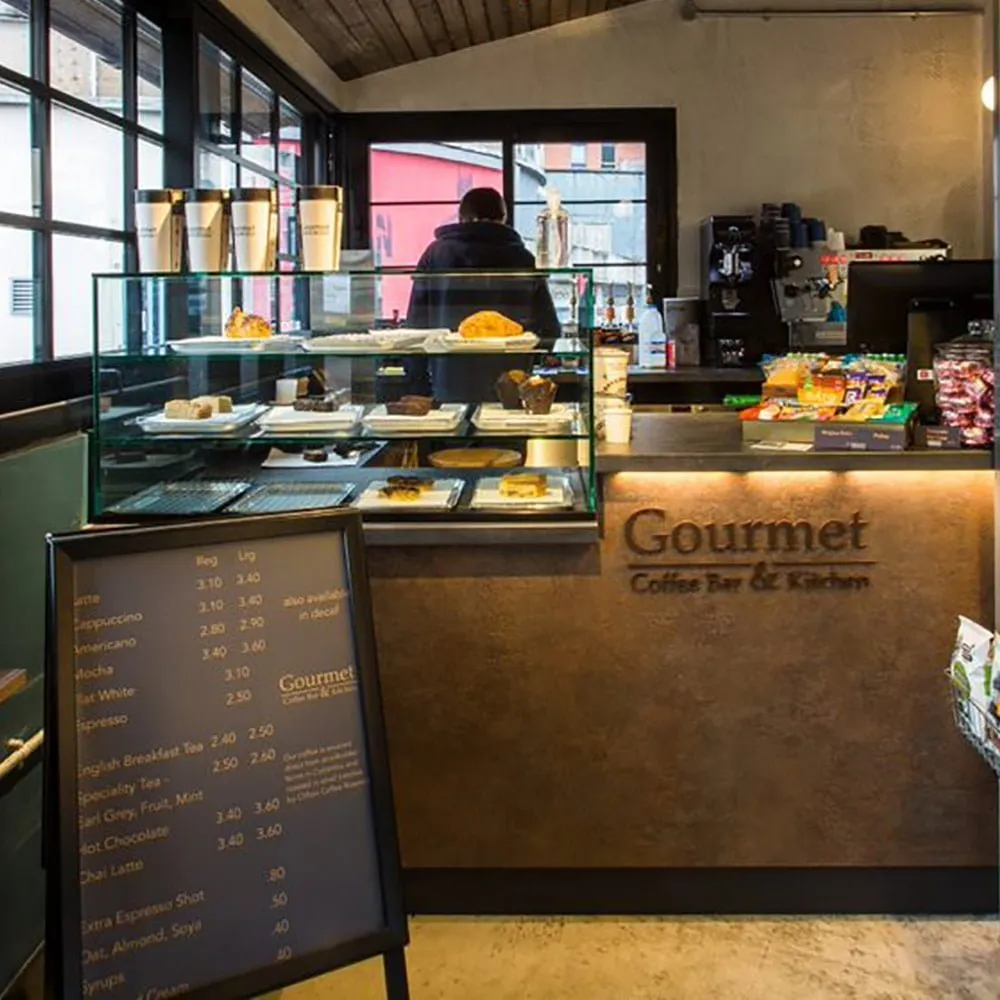
Branded Glass Displays


Mirrors for bars
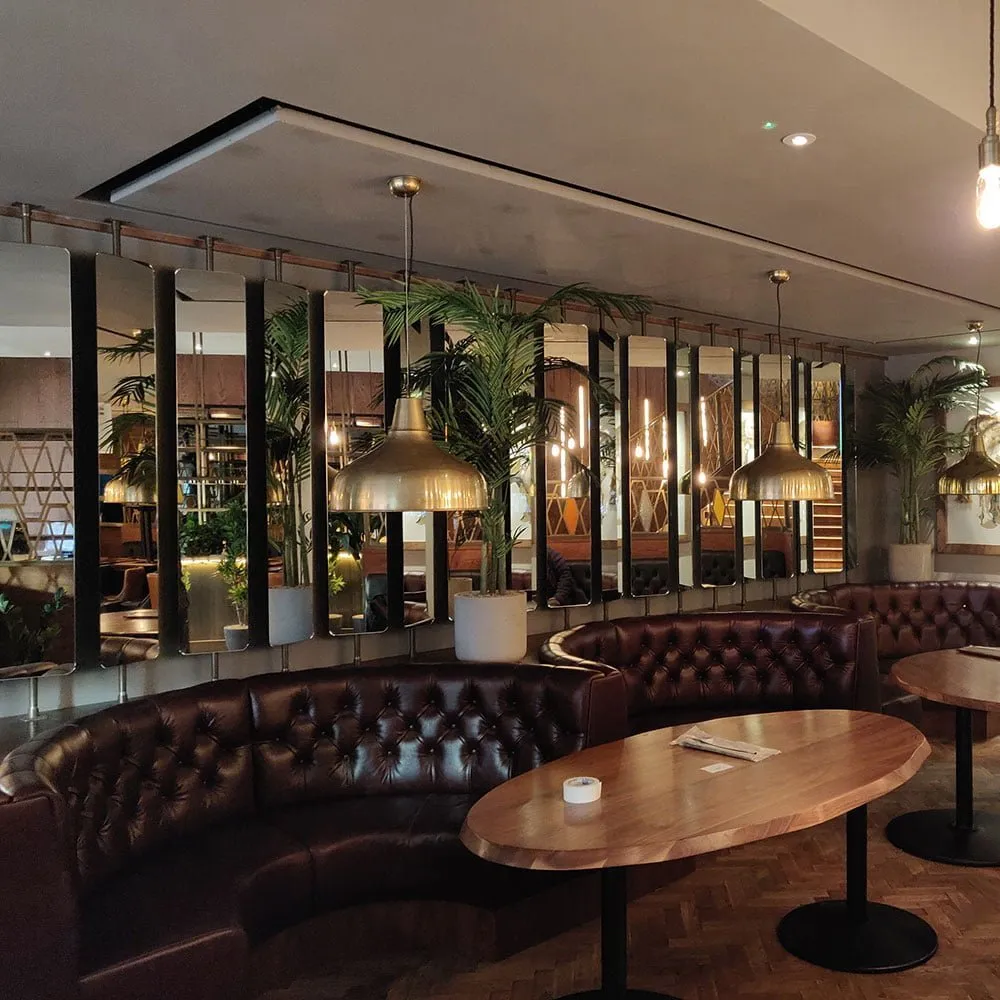
Aluminium framed restaurant mirrors
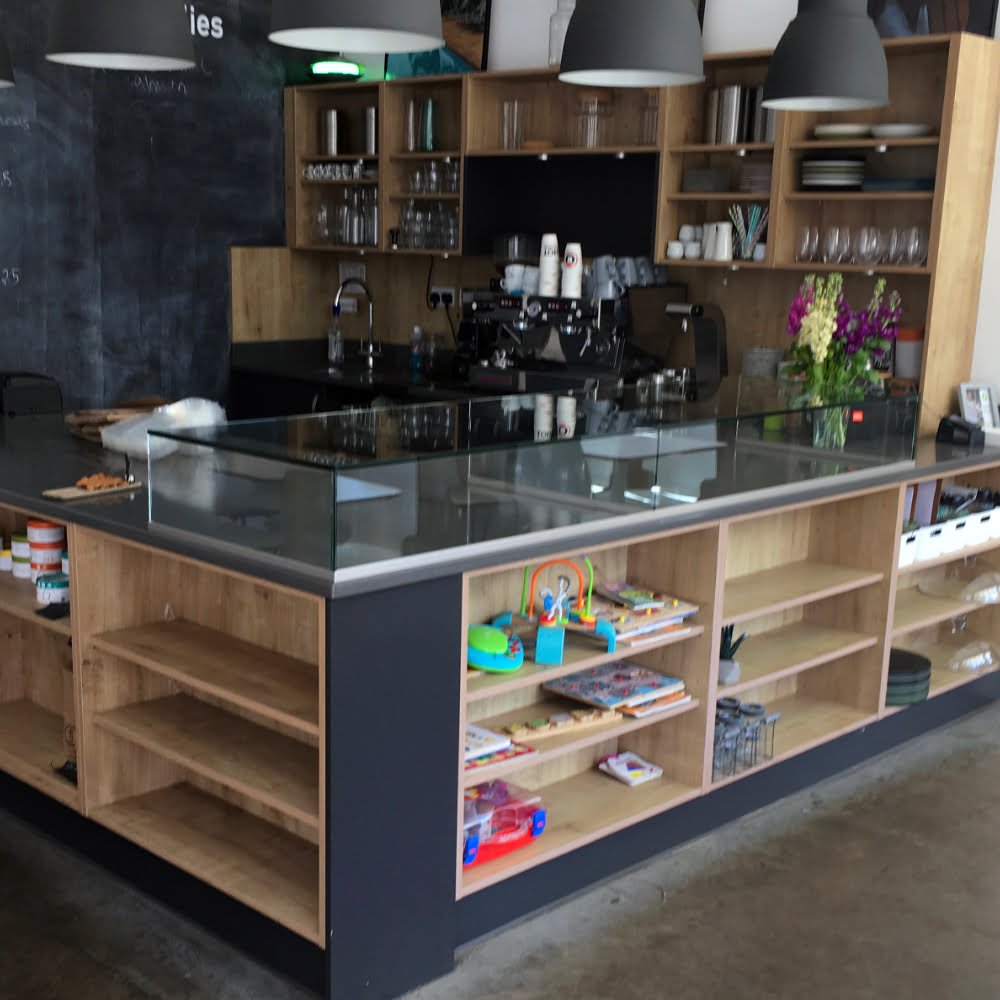
Glass cabinets for counters

Most hospitality environments require toughened safety glass as a minimum. It’s stronger than standard float glass and, if broken, shatters into small granular pieces rather than dangerous shards. For higher-risk areas or premium installations, laminated toughened glass can be specified for added strength and security.
Yes, but they must be specified correctly. In high-traffic areas or where impact is possible, mirrors should either be toughened or safety-backed to reduce risk. In some commercial settings, laminated mirror solutions are used to prevent dangerous breakage.
BS EN 12600 is the European impact test standard for safety glazing. It classifies glass based on how it behaves under impact. Major retail environments such as Harrods, Selfridges and most shopping centres require glazing that meets this standard in certain locations.
To conform, glass can be:
Fully toughened
Laminated with an interlayer
Toughened and laminated
Fitted with certified safety backing systems
The correct specification depends on the installation height, risk level and location within the venue.
Yes. Mirrors can comply by using laminated mirror construction or by applying approved safety backing systems that help achieve the required impact classification. In higher-risk commercial spaces, laminated mirror is often the preferred solution.
Use high-quality low-iron glass where clarity is critical, specify appropriate thickness, and ensure the substrate is flat. Poor-quality mirrors or incorrect fixing methods can create visual distortion, especially under strong downlights or LED strips.
Absolutely, but it must be calculated correctly. Shelf depth, span, load weight and fixing method all affect performance. Toughened glass shelving is commonly used, and in some cases laminated shelves provide additional reassurance.
LED backlighting, edge lighting, halo effects and integrated branding are all possible. The key is early coordination with electrical and joinery teams to conceal wiring and ensure maintenance access.
Precision manufacturing is essential. Glass and mirrors are produced to exact sizes based on confirmed site dimensions and tolerances. Early collaboration prevents costly site alterations.
Yes. Antique, tinted and etched finishes can all be manufactured in safety-compliant formats suitable for hospitality. The finish does not remove the need for safety specification.
Specify toughened or laminated glass where appropriate, use correct fixings, allow for expansion tolerances, and ensure installation follows manufacturer guidance. In hospitality, durability isn’t optional. It’s designed in from the start.