Go Glass Design for Silver Gilt Medal Winners
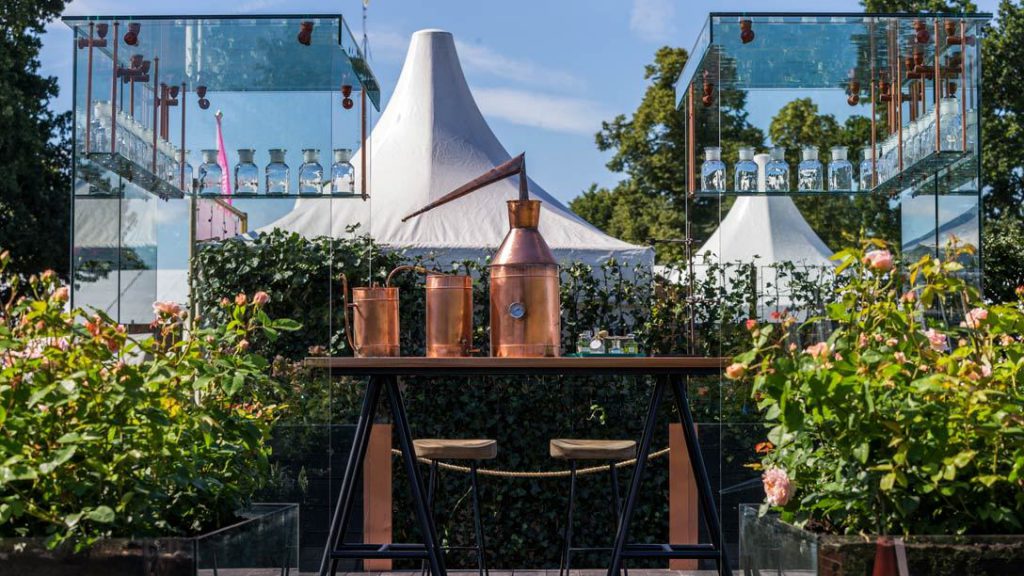
Go Glass were pleased to work with Garden designer Jade Goto and Garden House Design to apply our glass design skills to supply the glass botanical perfumery and planters for the Silver Gilt medal winner at Hampton Court Flower show 2016 sponsored by Crabtree and Evelyn.
Our designer Clive Sparkes says:
“Following our success at ‘Grand Designs Live’ we were commissioned to design two modular glass buildings which could be erected and dismantled for the RHS Hampton Court Palace Flower Show. Each structure weighed 400kg. Using 12mm Toughened Glass for the walls and 18mm Toughened Laminated for the roof, all held together with copper sprayed stainless steel clamps. Secured in place using a balustrade base shoe system hidden from sight by the black decking.”


UV bonding is a sophisticated technique used in the fabrication of glass furniture and displays, which involves the use of Ultraviolet (UV) light to cure a special adhesive that bonds glass panels together. This method allows for the creation of strong, virtually invisible joints between pieces of glass, resulting in a seamless and clean aesthetic that is highly valued in modern interior design, retail displays, and architectural applications. Here’s how UV bonding works and its application in making glass displays:
How UV Bonding Works
- Preparation: The glass surfaces to be bonded are meticulously cleaned and prepared to ensure they are free of any contaminants, dust, or grease. This step is crucial for achieving a strong bond and a clear finish.
- Application of UV Adhesive: A special UV-curable adhesive is applied to one of the glass surfaces. This adhesive is designed to remain liquid until exposed to UV light, allowing for adjustments and positioning of the glass pieces.
- Positioning and Alignment: The glass pieces are carefully positioned and aligned according to the design specifications. The liquid state of the adhesive at this stage allows for some repositioning if necessary.
- Curing with UV Light: Once the glass pieces are correctly aligned, the UV adhesive is exposed to ultraviolet light. The UV light triggers a chemical reaction in the adhesive, causing it to harden and bond the glass pieces together rapidly. The curing process can take from a few seconds to several minutes, depending on the adhesive and the size of the bond area.
- Final Inspection and Cleaning: After curing, the bonded glass assembly is inspected for any excess adhesive, which is then cleaned off. The final product is a clear, strong bond that is often stronger than the glass itself.
Applications in Glass Displays
- Retail Displays: UV bonding is widely used in the creation of retail display cases, shelves, and counters. The technique allows for the construction of complex, multi-tiered displays that appear to float without the distraction of metal frames or visible joints.
- Furniture: Glass tables, cabinets, and shelving units made with UV bonding offer a sleek, modern look that complements contemporary interior design trends.
- Aquariums and Terrariums: The technique is also used in the construction of aquariums and terrariums, where the clarity of the bonds and the absence of frames enhance the visibility and aesthetics of the contained environments.
- Architectural Features: UV bonding enables the creation of architectural features such as glass balustrades, staircases, and partitions, where the seamless joints contribute to a minimalist and elegant design.
Advantages of UV Bonding
- Aesthetics: The invisible joints create a seamless look that enhances the clarity and purity of glass designs.
- Strength: UV-bonded joints are incredibly strong, providing durability and stability to the assembled pieces.
- Flexibility: The technique allows for the creation of complex shapes and structures that would be difficult or impossible to achieve with traditional mechanical fastening methods.
- Speed: The curing process is rapid, enabling quicker production times compared to other bonding methods.
UV bonding is a revolutionary technique that has expanded the possibilities for glass design, allowing for the creation of stunning, durable, and innovative glass displays and furniture that blend seamlessly into modern spaces.


